Sun, Sweat, and Fangs: The Case for Hot-Climate Vampires
Vampires and heat shouldn't work as well as they do. But here we are.
The standard vampire setting of mist, cold Gothic architecture, and dark European nights exists for obvious reasons. Cold is dramatic, amplifies dread and, for vampires, it works because it tends to come with darkness. But today we’re flipping the script to a dead set favourite setting of mine: vamps outside of that comfort zone … vamps in hot and humid climates. There, something interesting happens. Not to the vampires, necessarily. They don't seem to care. Heat, as far as most vampire mythology goes, seems irrelevant to them. It's the light that kills, not the temperature. But for the viewer? That’s a different story.
The slightly paradoxical thing about warm-climate vampire fiction is that the gain isn't really the vampires'. It's ours as viewers. And I am absolutely here for it.
To make the case, I've revisited two films and a TV show. Ranked, indulgently, from least to most loved. Fair warning if you haven’t watched them and want to: the first and third are R-rated.
I'll try to keep spoilers light, though your comfort level may vary.
From Dusk Till Dawn (1996)
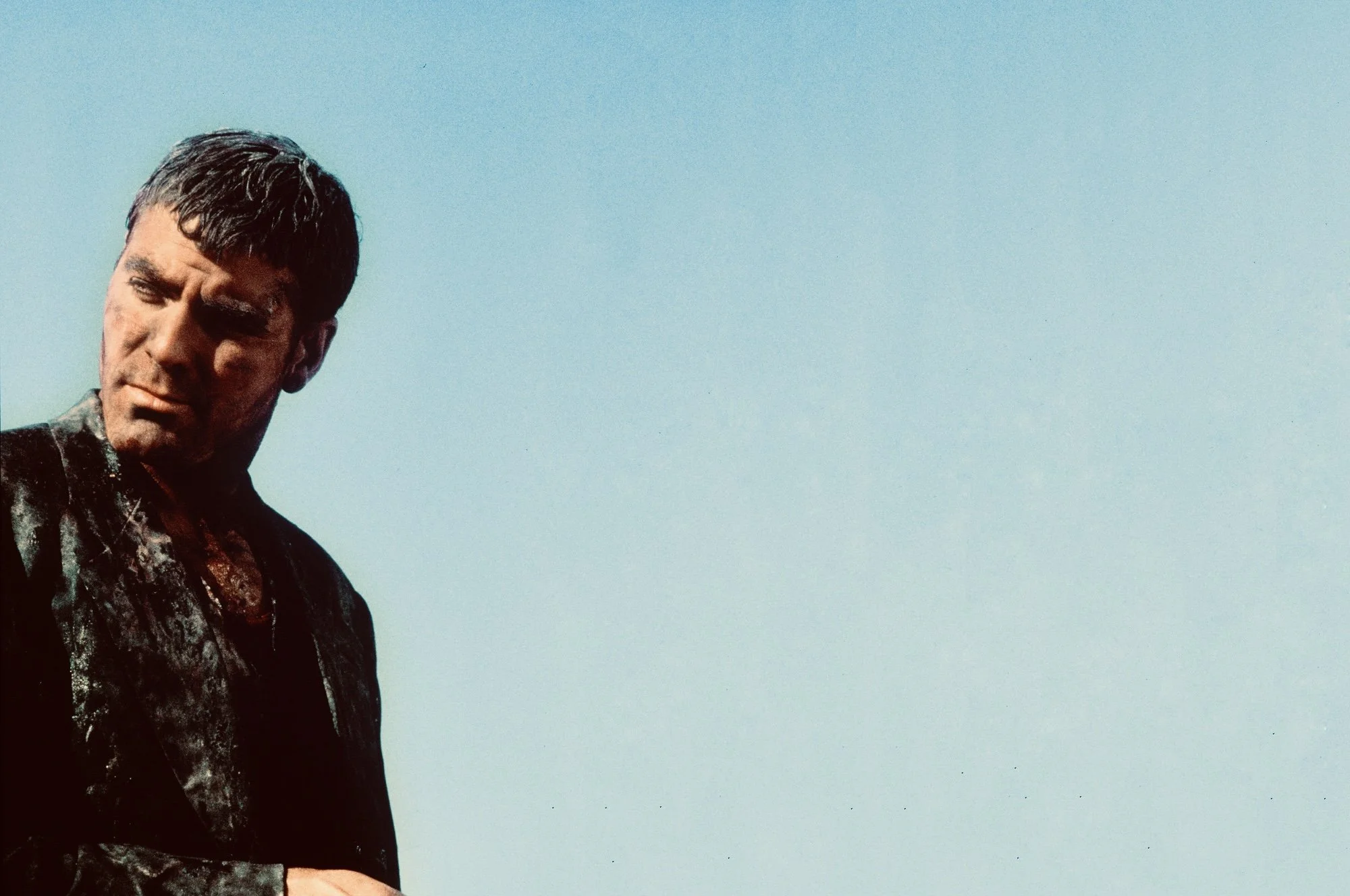
Let's begin with From Dusk Till Dawn. Hated it … and occasionally loved it. 😝
Look, this was a hard rewatch. I probably enjoyed the schlock-style craziness and brutal violence more the first time around, when Tarantino's brand of outrageous was having its big moment. He didn't direct this one (that was Robert Rodriguez) but Tarantino wrote it and starred in it, and his touch is right through the film and, true to form, it’s not a gentle touch. Super dark humour. Definitely some cringe. But also hilarious in places. The crotch-auto weapon thing. I mean, I’m not immune to immature jokes … not by a long shot.
But we're here for the heat and vampires. The setting is a dry, dusty stretch near the US-Mexican border and that environment does good work because it feels lawless and uncivilised. Even the Sheriff in the opening scene is foul-mouthed, further suggesting the wildness, and then two of the main characters are literal outlaws. But the landscape sets everything up, signalling that normal rules do not apply around there.
The bright light of the desert flips the moment the main characters step into a nightclub in the middle of nowhere, on the Mexican side of the border. Hot and bright, then boom. They enter a garish neon building to drink at a bar where you know immediately that things are going to go very wrong. In other words, the lawless, uncivilised feeling continues. 🤭 The vampires reveal themselves there. I won't say more, but that's how they manage the bright climate problem. The nightclub gives them cover. Neat. Just not for the humans inside with them.
The heat's job is effectively done right at the beginning when it establishes this immoral and frightening geographical wildness that makes everything that happens in the film possible.
Interview with the Vampire (1994)
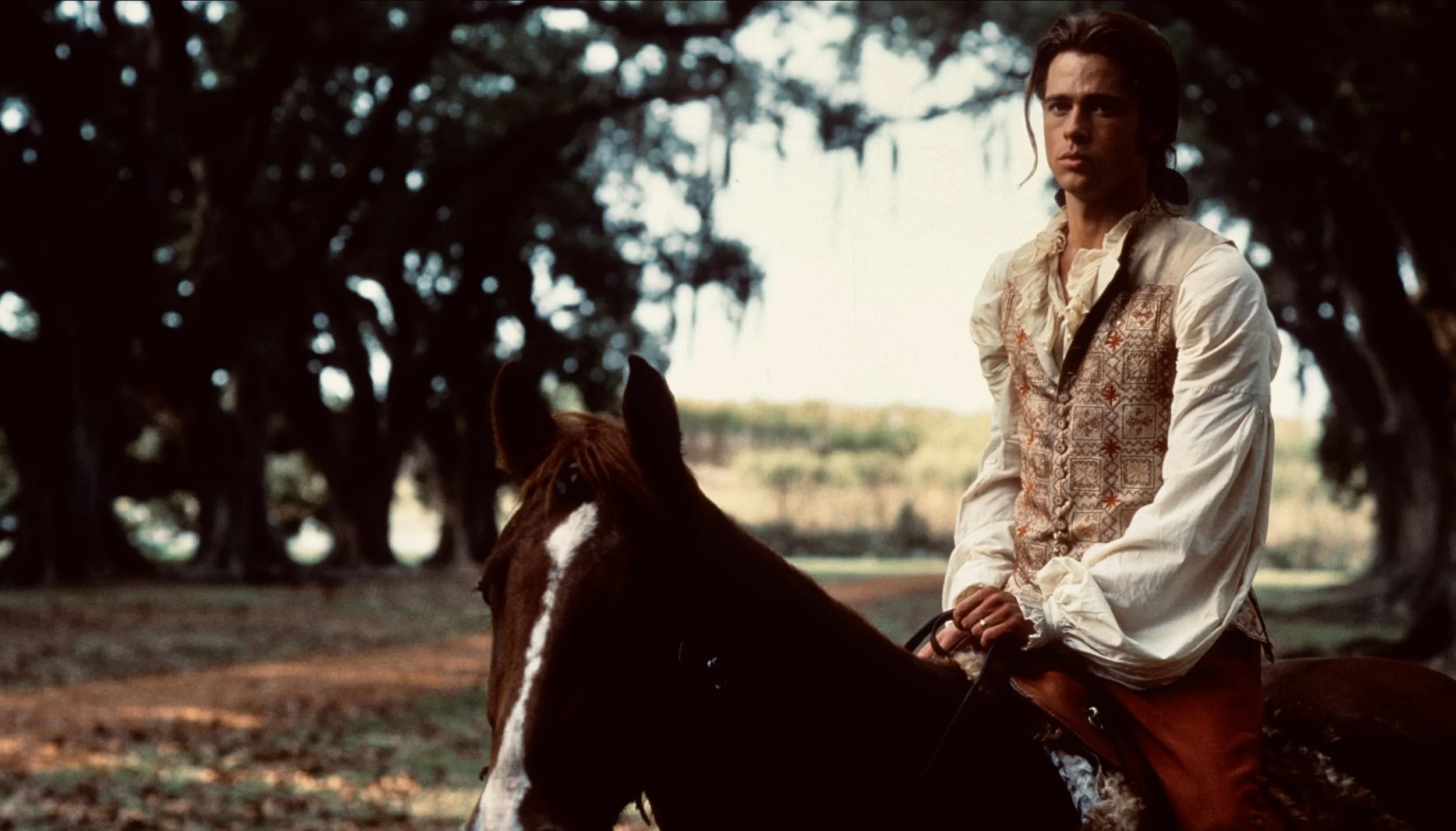
It was only when I revisited Interview with the Vampire that I discovered a TV series had since been made. How I missed that I genuinely cannot explain, but I've decided to skip it, so this is strictly about the 1994 film.
A very enjoyable rewatch. I’d estimate roughly half is set in Europe. Cold. But the first half is Louisiana, which is what we're here for. Louis, the vampire giving the interview, owns a plantation just outside New Orleans. He, his maker Lestat, and later Claudia (about whom you can find out yourself by reading the book or watching the film 😉), move through the streets and bars doing what vampires do. Often while Louis laments his situation, a trope I'm genuinely fond of.
How the vampires manage the Louisiana days is handled simply: coffins appear in scenes, and at least one moment makes it absolutely clear that sunlight is a killer. The practicalities of keeping those coffins safe from human interference while they sleep goes unexplained, but the delightful setting does compensate in my opinion. I love watching 18th century vampire life play out in the darkness: clothing tailored, piano lessons, quiet reading.
Anne Rice's novel, one of my favourite books from my teens, made more of the Louisiana heat than the film does as far as I recall. The film is faithful to the characters and story arc though, which is great, but I think it moves on to Europe a little too quickly and the warm setting gets left behind before it's been fully explored and enjoyed. It feels like a missed opportunity to me. I’ve heard the 2022 AMC series corrected this, spending more time in New Orleans.
True Blood (2008–2014)
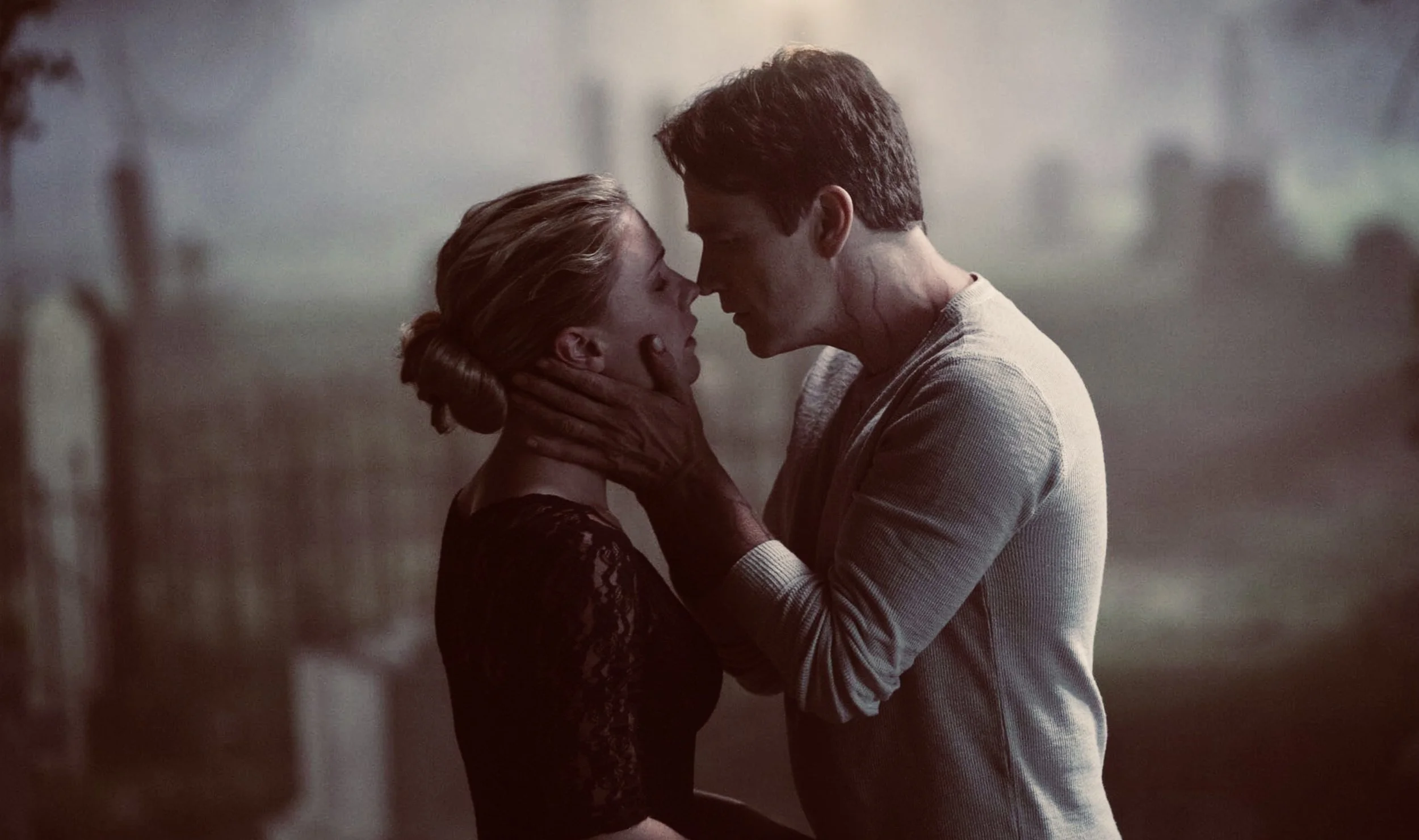
If you've been around here a while, you already know. I love it. I. Love. It. So.
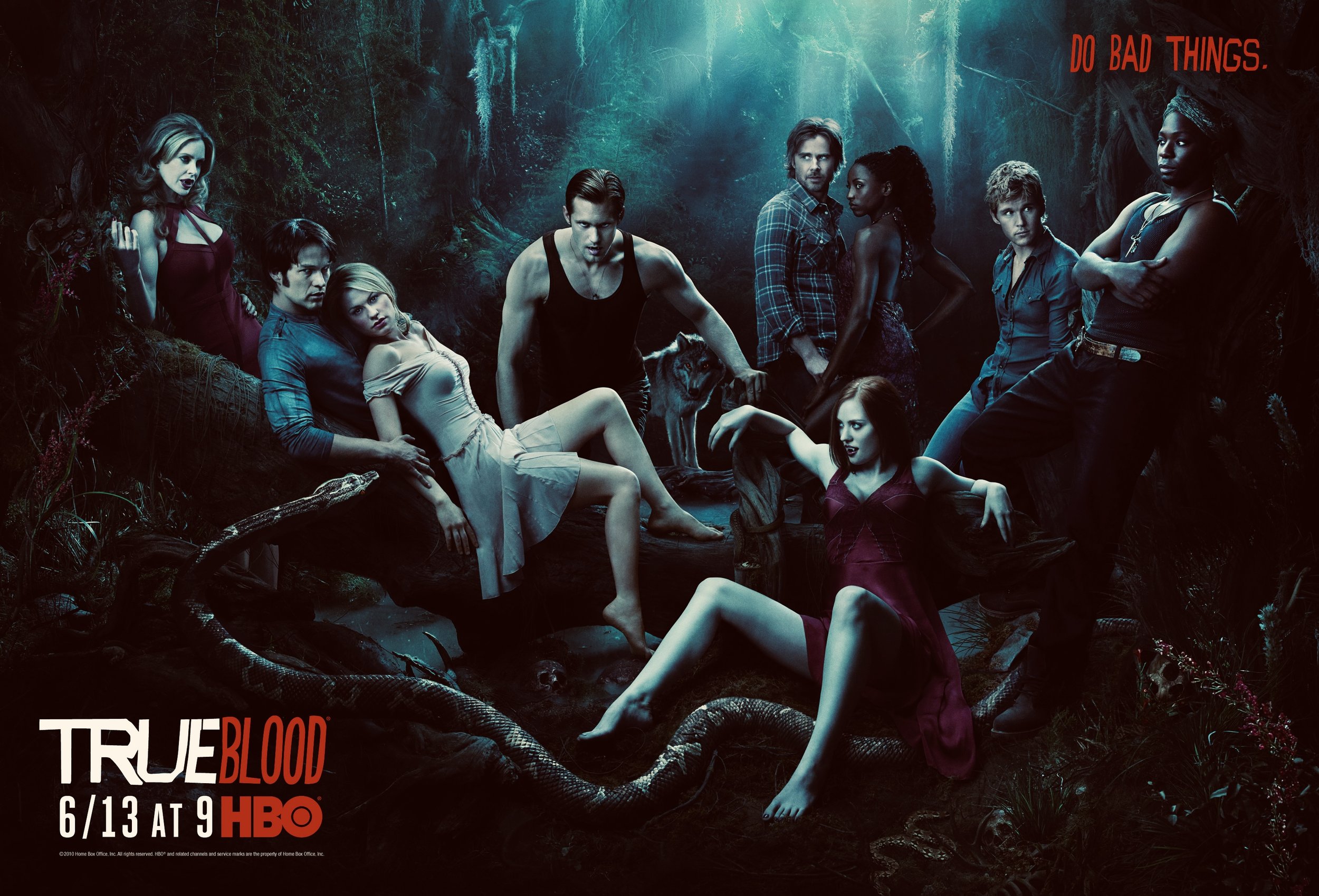
True Blood is set in Louisiana, mainly in the fictitious north-western small town of Bon Temps, which functions as a character in itself (and one of my favourite characters, too). Shreveport features regularly as well, as the home to Fangtasia, a vampire-owned nightclub. That detail makes complete sense within the show's world: vampires are out. They live among humans, own property, run businesses. In some states, in a deliberate parallel to the same-sex marriage debate, they can legally marry. Of course some of them open nightclubs! 🤷🏻♀️🩸
The environment is impossible not to love. Lush lakes in colours too vivid to be entirely real. Nosy neighbours hanging out on the footpaths. Sweaty Sunday church services, electric fans turning, human hands fanning with anything they can get hold of. None of it bothers the vampires, of course. Heat, though never addressed directly, appears irrelevant to them. It's the light that's deadly, and True Blood shows exactly what sunlight can do, multiple times over. It isn't pretty.
Heat does sneak in sideways though. Bodies decompose fast in that climate. And the show does interesting world-building around light specifically. There are a variety of sleeping options shown from coffins to vintage cubbies in crawlspaces, to luxury bedrooms created just for vampires. Characters travelling interstate use light-tight travel coffins, and on at least one occasion stay at Hotel Carmilla, a vampire hotel offering rooms that can be sealed before sunrise. That name is almost certainly a direct nod to Sheridan Le Fanu's 19th century vampire novella Carmilla. Too deliberate to be coincidence.
The vampire social structure in True Blood is interesting too. The show has its own hierarchy. For example, there are vampire sheriffs who police vampire territories, operating alongside yet largely hidden from human society. A parallel world with its own rules. Distinct from the set up I imagined in my paranormal mystery novel The Red Line, where vampire detective Sarina works within a human government department (After Dark). It’s set up specifically to handle vampire-related crimes and is integrated, not parallel.
What the show does that the films above can’t is spend more time on playing up the humidity and oppressive heat. In the seasons and episodes set in the summer, the climate becomes this great counterpoint to the bursts of violence and the *explicit sex scenes the show is known for. That tension, like something’s about to boil over, runs through many scenes.
True Blood is also steeped in Southern Gothic. The beautiful, disturbing decay of it. That deserves a much deeper dive than I have space for today. But the choices were deliberate: filming locations, sets, casting, costuming. Night scenes in Bon Temps' small graveyard and forest hunts, cut against Sookie Stackhouse tanning in a bikini, pool parties bright and dazzling in the Southern sun. Very few accidents. A great show.
So … vamps in the heat: genuinely one of my favourite subgenres.
Which do you prefer: cold vampires or hot? And if you have warm-climate vampire recommendations— film, TV, or books — drop them in the comments. 👇🏻
Morgan x
*Should HBO ever see this (😂😭🤯): As someone who loves to rewatch (and rewatch) True Blood, I am not doing it for the explicit sex scenes, and I’d pay for another box set of the show if you created one without those. Seriously. 👌🏻